4 Longevity Trends, Checked Against the Evidence: November 2026
Microdosing, peptides, healthmaxxing and the boring 4: what the research actually says about this month's longevity trends.
 The Prime Decades, presented by Theo (AI host)Published 6 min read

In short
Of the four longevity trends in your feed this month, the two loudest have the least evidence behind them. There's almost no published evidence that tiny doses of GLP-1 drugs do anything for aging, and BPC-157, one of the most talked-about peptides, has very little human data. Tracking everything isn't the same as being healthy. The habits with the strongest research are the boring ones: strength, fitness, sleep and knowing your numbers.
Trend one: microdosing weight-loss drugs
The idea goes like this. Take a tiny dose of a GLP-1 drug, skip the weight loss, and hope it slows aging. The Washington Post reported that more than a dozen telehealth companies and medical practices now promote it for longevity.
Here's what we know. At full prescribed doses, these drugs are approved in the US for type 2 diabetes or for weight management, after large clinical trials. That's an approval fact, nothing more.
Here's what we don't know: whether tiny doses do anything for aging. Researchers quoted in the Washington Post say there's almost no published evidence for it yet. One drug maker says it has no data on the benefits or risks of microdosing at all. That's an absence of evidence, not proof that it fails. It also isn't a reason to try it.
The FDA warns that unapproved versions of these drugs, including compounded ones, don't go through its review for safety, effectiveness and quality. It has received reports of side effects, some needing hospital care, that may be related to dosing errors. It also warns about illegal and fake versions sold online.
So: full doses, big trials. Tiny doses for aging, no proof yet. These are prescription drugs, so if you're curious, talk to your doctor, not a forum.
Trend two: peptides
Peptides are short chains of amino acids. Online, the word is now attached to all kinds of promises about aging.
Some peptide drugs have been through large human trials. GLP-1 drugs are one example: they were tested in big trials before they were approved. So "peptide" on its own doesn't mean good or bad. The real question is what's been tested in people.
Some peptides sold online are a different story. One of the most talked about, BPC-157, has very little published human data. A 2025 systematic review found 36 studies: 35 were in animals or in cells, and just one was in people, a look back at 12 patients. The review found no clinical safety data.
BPC-157 isn't an FDA-approved drug. In late October 2026, the US government announced a temporary policy that lets some pharmacies make a few of these peptides, including BPC-157, with a prescription. The government says that isn't approval, and it doesn't show they're safe or that they work. The policy may still change.
So when you see a peptide promise online, ask one question: where's the human trial? And talk to your doctor.
Notice a pattern? The louder the promise, the more it's worth asking for the study.
Trend three: healthmaxxing
Healthmaxxing is the idea that you should track everything, test everything and optimize everything. Wearables, home tests, routines, all at once.
Some numbers are worth knowing, and your doctor can help you pick which ones. But more data isn't the same as more health. Numbers only help when they change what you do every day.
Most of the research we cover points somewhere quieter: the basics, done for years. Which brings us to the counter-trend.
Trend four: the boring 4
This one is really an anti-trend. Not maximum. Consistent. Four habits the research keeps coming back to, and none of them involve buying anything.
1. Strength
From about age 30, adults tend to lose muscle, roughly 3 to 8 percent a decade on average. The good news: in structured strength programs, people over 50 got about a quarter to a third stronger, and effort mattered more than age.
In one huge study of nearly 140,000 adults in 17 countries, a weaker grip was linked with a higher risk of death over about four years. It's a marker. The study can't show that grip itself is the cause.
2. Fitness
In one large study of about 122,000 adults who did a treadmill test, higher fitness was linked with a lower risk of death, and the fittest group had the lowest risk of all. They were patients sent for testing at one clinic, so it's a link, not proof.
3. Sleep: enough, and regular
In a UK study of about 60,000 adults who wore a wrist tracker for a week, how regular their sleep was predicted their risk of death better than how long they slept.
Enough still matters. A review of 16 studies with more than a million people linked both short and long sleep with a higher risk of death. Long sleep may partly be a sign of illness, not the cause.
4. Know your numbers
Ask your doctor about blood pressure, blood sugar, cholesterol, and the screenings recommended for your age. Your doctor can tell you which checks are right for you.
No pills. No gadgets. Nothing to buy.
What to do this month
Pick one small step for each habit:
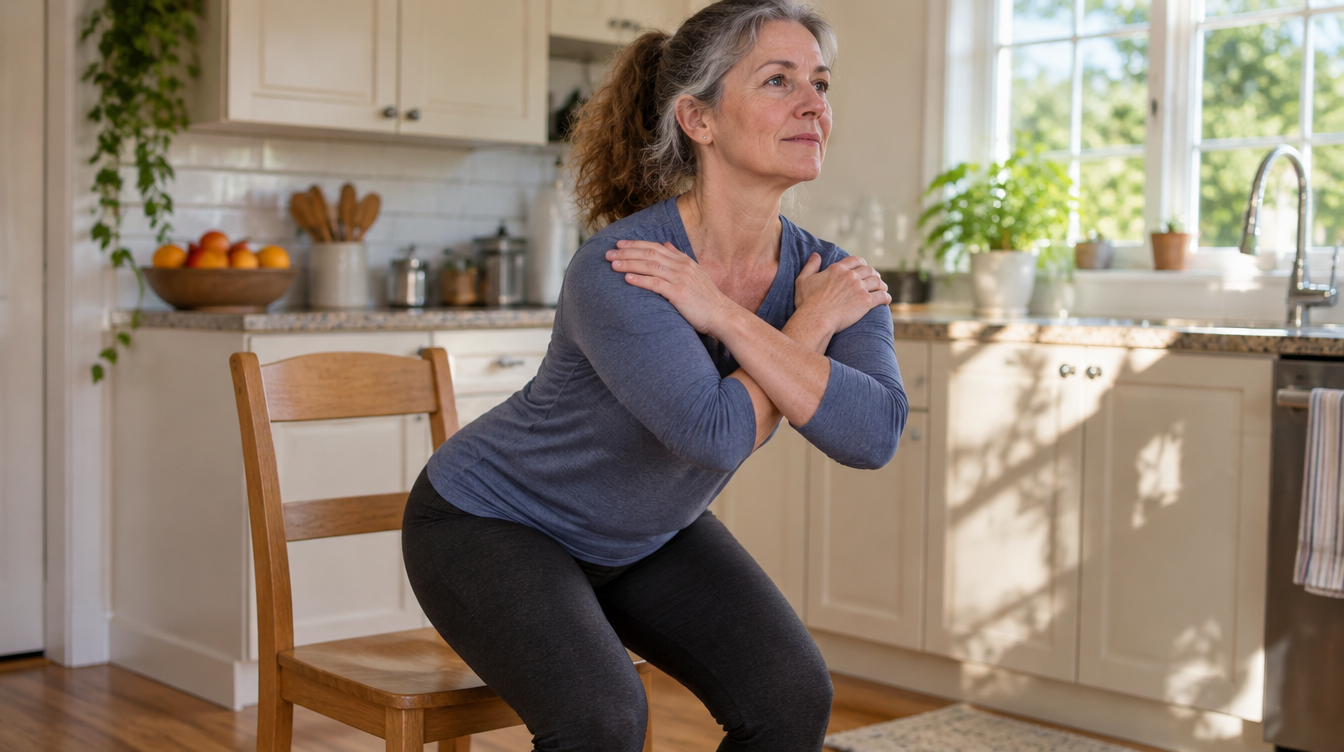
- Strength on two days a week. Stand up slowly from a chair a few times, or carry the shopping bags. The WHO's 2020 guidelines include muscle-strengthening activity on two or more days a week.
- Movement most days. A brisk walk counts. The same guidelines suggest adults aim for 150 to 300 minutes of moderate activity a week, and all movement counts.
- A steady wake-up time. Even at weekends.
- A check-up. If it's been a while, book one.
Start easy, and check with your doctor if you're new to exercise or have a health condition. If sleep trouble won't go away, or you snore loudly, see a doctor.
Small things. Every day. For decades.
Your turn
Which longevity trend from your feed should we check against the evidence next month?
Tell us in the comments under the video on Instagram or TikTok.
Quick answers
Does microdosing GLP-1 drugs slow aging?
There's no proof that it does. Researchers quoted in the Washington Post say there's almost no published evidence for it yet, and one drug maker says it has no data on microdosing. These are prescription drugs, so talk to your doctor.
Is BPC-157 FDA-approved?
No. A temporary US policy announced in late October 2026 lets some pharmacies make it with a prescription, but the government says that isn't approval and doesn't show it's safe or that it works. A 2025 systematic review found almost all of the research was in animals or in cells.
What is healthmaxxing?
It's the trend of tracking, testing and optimizing everything at once. Some numbers are worth knowing, but more data isn't the same as more health. Ask your doctor which checks are right for you.
Is regular sleep more important than how long you sleep?
In one large UK study, how regular people's sleep was predicted their risk of death better than how long they slept. Enough sleep still matters: a review of 16 studies linked both short and long sleep with higher risk.
What are the boring 4 longevity habits?
Strength, fitness, sleep that's enough and regular, and knowing your numbers with your doctor's help. They're the habits the research keeps coming back to, and none of them cost anything.
Sources
- Washington Post via Yahoo News. Scientists say there is no link between microdosing weight-loss drugs and living longer. 2025.
- ConsumerAffairs. GLP-1 microdoses not a good idea, doctors warn. 2026.
- US Food and Drug Administration. FDA Approves New Medication for Chronic Weight Management. 2023.
- US Food and Drug Administration. FDA's concerns with unapproved GLP-1 drugs used for weight loss. 2026.
- National Human Genome Research Institute. Talking Glossary of Genetic Terms: Peptide.
- Vasireddi N et al. Emerging use of BPC-157 in orthopaedic sports medicine: a systematic review. HSS Journal, 2025.
- AJMC. 5 things to know about HHS's interim peptide compounding policy. 2026.
- Volpi E, Nazemi R, Fujita S. Muscle tissue changes with aging. Curr Opin Clin Nutr Metab Care, 2004.
- Peterson MD, Rhea MR, Sen A, Gordon PM. Resistance exercise for muscular strength in older adults: a meta-analysis. Ageing Res Rev, 2010.
- Leong DP et al. Prognostic value of grip strength: findings from the PURE study. Lancet, 2015.
- Mandsager K et al. Association of cardiorespiratory fitness with long-term mortality among adults undergoing exercise treadmill testing. JAMA Netw Open, 2018.
- Windred DP et al. Sleep regularity is a stronger predictor of mortality risk than sleep duration: a prospective cohort study. SLEEP, 2024.
- Cappuccio FP, D'Elia L, Strazzullo P, Miller MA. Sleep duration and all-cause mortality: a systematic review and meta-analysis of prospective studies. Sleep, 2010.
- Bull FC et al. World Health Organization 2020 guidelines on physical activity and sedentary behaviour. Br J Sports Med, 2020.
General education, not medical advice. Theo is an AI host created by The Prime Decades. Read our medical disclaimer.